Calf Rearing Strategies | Agvance Nutrition New Zealand

CALF REARING STRATEGIES

Calf rearing good practice ensures healthy, happy calves!
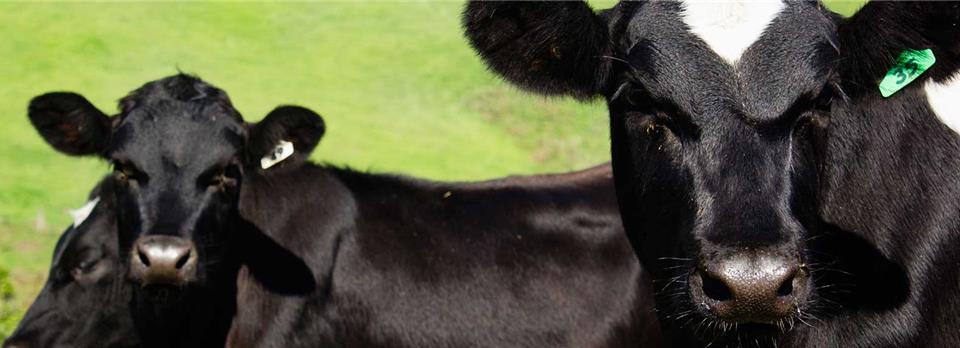
Approximately 1.5 million calves are reared in New Zealand each year – 1 million being dairy heifers that will become the future herd replacements. How these calves are raised will affect how they grow and at what weight they enter the herd. It is essential to give such calves a great start to life so as to ensure a long productive, healthy milking life. Heifers that reach target weights make successful milking cows and raising them well starts from the day they are born.

COLOSTRUM

Within the first 24 hours of being born, all calves, including bobbies must receive adequate fresh colostrum or a colostrum substitute and this should continue for at least the first 4 days of life because it will protect against disease by fighting infections within the gut. The calf should drink at least 2 litres of fresh gold colostrum during the first 6 hours of life, and then again at 12 hours to get protective antibodies known as immunoglobulins as they are born with poorly developed immune systems. This process is most effective in the first 24 hours after birth and is known as ‘passive transfer.’ Failure to do this, known as Failure of Passive Transfer (FPT) to absorb enough immunoglobulins in these first critical 24 hours, can make a calf susceptible to disease, death and long term reductions in animal productivity. Past studies have found that 10 – 40% of calves are deficient in colostrum which can result in higher morbidity rates and slower growth rates through to 14 weeks of age.

REASONS FOR FPT

FPT is fairly common with NZ studies indicating a 33% prevalence at various intervals during the spring calving period. A number of reasons why calves get FPT are the following: a) the colostrum has inadequate immunoglobulin levels, b) feeding insufficient volumes of colostrum, c) feeding takes place too late after birth and d) bacteria especially Coliforms contaminate the colostrum at harvest, during storage or at feeding.

TESTING & PREVENTING FPT

To combat FPT, it is imperative that you test your calves to make sure that they are getting enough high quality colostrum within the first 24 hours of life. There are a number of ways to measure and prevent FPT:

Read More »
The merits of boron for dairy cows | Agvance Nutrition New Zealand

THE MERITS OF BORON

Article by Robin Boom. One problem farmers face today in relation to fertilisers is just whose advice to follow, since opinions between scientists, independent consultants, farm advisers and different fertiliser company reps is so wide and varied, and when it comes to the application of boron we have a classic example.
I personally believe the non-application of boron on many farms is costing farmers dearly in the areas of stock health and poor pasture production, particularly from clovers. Although there is debate over the primary function of boron in plants, it is known that boron deficiency reduces the ability of root cells to absorb phosphorus, chlorine and rubidium (used to mimic potassium). This will result in stunted clovers, not only above the soil, but also below as far as the root mass is concerned, thus reducing the plants’ ability to exploit the soil.

Responses to boron become most marked when all the other elements are in good supply. Farms which have regularly received good applications of lime and potassic super, yet on which pasture growth is not really firing, could well benefit from boron. A pot trial at Ruakura showed production responses to boron on a boron deficient soil near Taupo in red clover of up to 107% increase, 74% in lucerne and 43% increase in white clover (NZ Journal of Agricultural Research 1983, p. 197-203).

Boron has also been associated with calcium deficiency in plants and animals. Boron appears to be a catalyst for the absorption and transport of calcium. When cows go down with milk fever, Calcium Boroglucanate (calcium, boron and glucose) is often used as a remedy, and this contains 4% Boric Acid (soluble boron). On one of the Caribbean islands, the high incidence of arthritis was attributed to a very low boron status in the soil. Interestingly enough, New Zealanders also have one of the highest incidences of arthritis in the world. In apple trees, bitter pit, which is caused by a low calcium level, has been corrected through boron applications. Low calcium levels in pasture plants can sometimes be attributed to the low levels of boron, even though the calcium level is good in the soil.

Boron deficiency has also been linked to poor seed and flower formation in grasses and clovers. In another pot trial at Ruakura in 1983, the affect of boron on seed production from red and white clover cultivars and lucerne was tested on a known boron deficient soil. The results were that seed production was multiplied many times with the addition of boron. In red clovers and lucerne, this was caused by a big increase in flower numbers, whereas for white clovers the increase was in the number of seeds per flower (NZ Journal of Experimental Agriculture 1983). This increase in seed production can be very significant for permanent pasture where a lot of natural reseeding takes place.

Read More »
Search