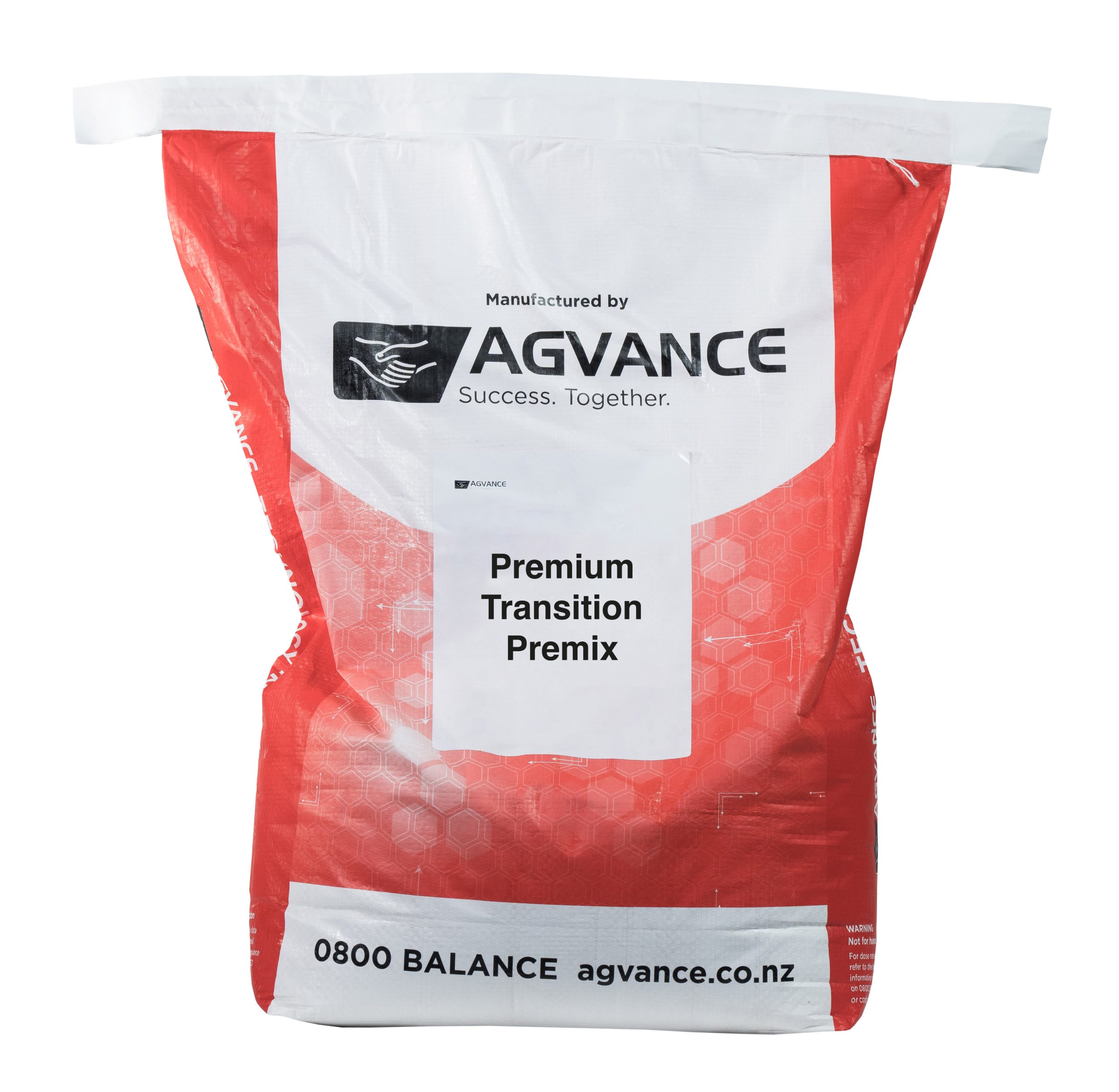
Premium Transition Premix North Island

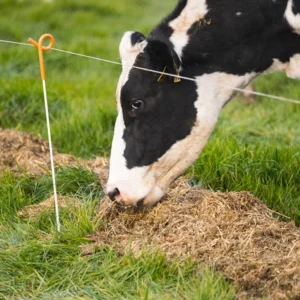
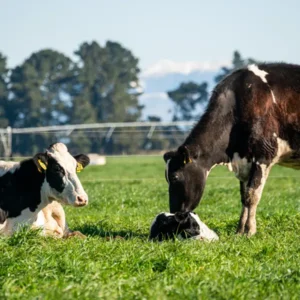
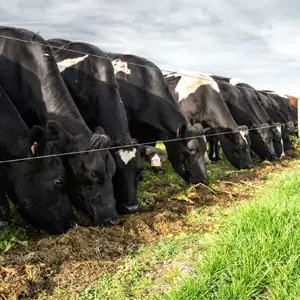
Agvance’s Premium Transition Premix NI is specifically designed for North Island springers to support rumen function and provide the essential trace minerals required during transition. Scientifically-proven benefits:
  • Superior animal health
  • Designed for transition period
  • Provides mineral salts in negative DCAD form
  • Increases immunity
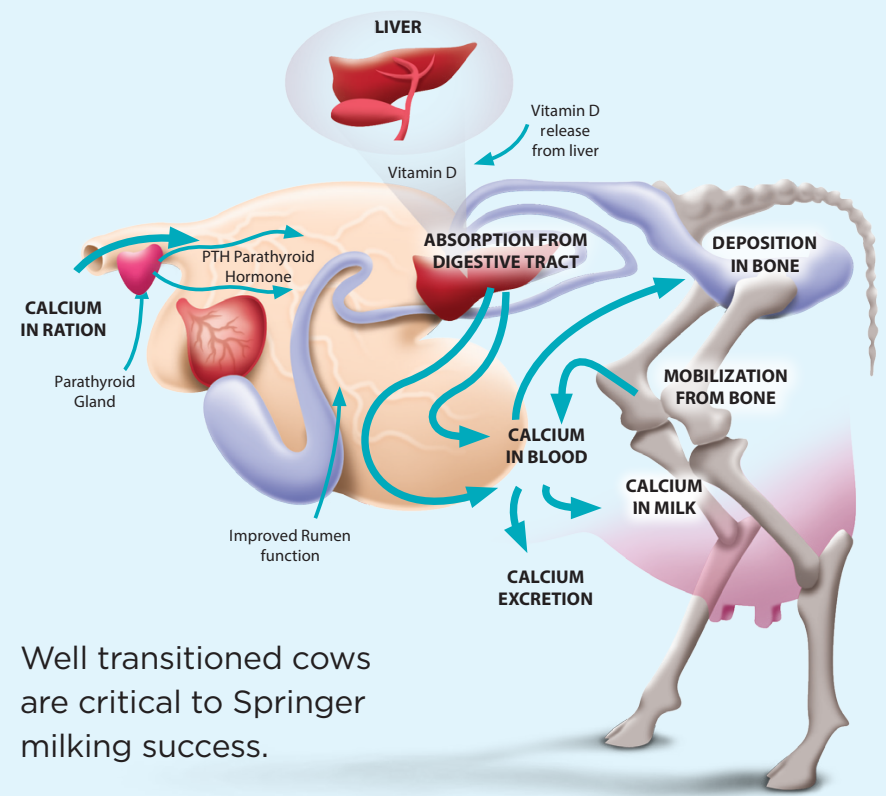
Talk to your local Agvance Consultant A solid transition plan is crucial to start your cows off on the right foot and set your season up for success, and the impact of feeding a balanced diet with the right mineral supplementation cannot be underestimated at this time. Agvance has developed Premium Transition Premix NI to ensure you’re giving the right mineral supplementation to your springer cows at the right time. Negative DCAD for transition Premium Transition Premix uses anionic salts along with key trace elements to improve rumen function and supply higher levels of available energy in early lactation. Using negative DCAD supports the mobilisation of calcium and phosphorus to reduce the risk of milk fever and other metabolic issues. Easily dosed Transition Premix can be dosed via mixer or feedout wagon. It blends well and its excellent palatability means the cows will eat their full ration, making it a cost-effective way to ensure your cows are getting all the minerals they need.   Improve cow performance with premium mineral ingredients   Get the science with our Springer Transition Series: How to ensure your springers get the right mineral supplementation Supplementation of the springer cow is critical to minimising metabolic diseases. We recommend the following steps to ensure your springers receive the correct levels of minerals.  Step 1: Decide what you’re going to feed your springers and how much. Step 2: Complete a herbage analysis on the pasture, silages, and other components of the diet. Step 3: Calculate the DCAD, which gives you an idea of how risky that feed or diet is to causing metabolic disease.  Step 4: Ascertain the magnesium, phosphorus, calcium, and mineral proportions of the feed. Step 5: With the herbage analysis complete, look at the calcium, magnesium, and phosphorus components of the diet. Levels within the total diet should sit at:

  • calcium 0.7%
  • magnesium 0.2%
  • phosphorus 0.3%
Most springer diets don’t contain enough calcium to get cows through the springer period and transition well. Magnesium is also critical. Most farmers will dust regularly for springer cows. This usually requires a calcium, phosphorus, and magnesium supplement to go along with the DCAD salt, or the DCAD-lowering supplement to the springer cows. Talk to your local Agvance Consultant Get in touch today for specific advice or to order: Call 0800 BALANCE, contact your local Agvance consultant directly or login to your Agvance account.

What the research shows

  • A meta-analysis of transition cow studies found that lower pre-calving DCAD diets were associated with lower milk fever risk, with responses also influenced by calcium, magnesium, phosphorus, and time on diet. (DOI: 10.3168/jds.S0022-0302(06)72130-0
  • A controlled study found that cows fed a negative prepartum DCAD diet had a smaller decline in blood ionised calcium around calving and required less calcium infusion after calving to maintain normal blood calcium. (DOI: 10.3168/jds.2023-23588)
  • A study comparing anionic supplement sources in negative DCAD diets found both approaches reduced urine pH and induced metabolic acidosis, supporting calcium mobilisation, while one source improved prepartum dry matter intake without reducing postpartum performance. (DOI: 10.3168/jds.2019-16991)
Limits

These studies test negative DCAD transition strategies and anionic supplement approaches, not this specific Agvance product. They also do not directly test the exact formulation of Premium Transition Premix North Island under typical North Island pasture-based dairy conditions.

Study details and links

What was tested

Research on negative DCAD transition feeding in dairy cows, including meta-analysis data on milk fever risk, controlled prepartum feeding studies measuring calcium dynamics around calving, and comparisons of anionic supplement sources used in negative DCAD diets.

Milk fever risk, blood ionised calcium, calcium infusion requirements after calving, urine pH, degree of metabolic acidosis, dry matter intake, and postpartum performance.

  • Hypocalcemia in dairy cows: Meta-analysis and dietary cation anion difference theory revisited, Journal of Dairy Science: DOI 10.3168/jds.S0022-0302(06)72130-0
    Publisher page: https://www.journalofdairyscience.org/article/S0022-0302(06)72130-0/fulltext 
  • Influence of prepartum dietary cation-anion difference and the magnitude of calcium decline at the onset of lactation on mineral metabolism and physiological responses, Journal of Dairy Science: DOI 10.3168/jds.2023-23588
    PubMed record: https://pubmed.ncbi.nlm.nih.gov/37769944/ 
  • Effects of anionic supplement source in prepartum negative dietary cation-anion difference diets on serum calcium, feed intake, and lactational performance of multiparous dairy cows, Journal of Dairy Science: DOI 10.3168/jds.2019-16991
    PubMed record: https://pubmed.ncbi.nlm.nih.gov/32113769/ 
  • Evidence supports negative DCAD transition strategies and the use of anionic mineral supplementation before calving, not this branded premix on its own. 
  • Results depend on total diet formulation, DCAD target, calcium and magnesium supply, time on diet, intake, and how well the feeding system achieves consistent consumption. 
DOSAGE METHODS

MIXER WAGON

FEEDOUT WAGON

ADDITIONAL PRODUCT INFORMATION
VIEW OUR BROCHURE
Search