THE LINK BETWEEN WINTER NUTRITION AND A SMOOTH TRANSITION
Wintering decisions shape the success of early lactation. Poor nutrition through winter can lead to costly problems, including slow calving recoveries, retained membranes, ketosis, and

Wintering decisions shape the success of early lactation. Poor nutrition through winter can lead to costly problems, including slow calving recoveries, retained membranes, ketosis, and
Spring brings heavy demands for our dairy cows, with calving, peak milk, and successful mating all crucial milestones for a profitable season, and all in
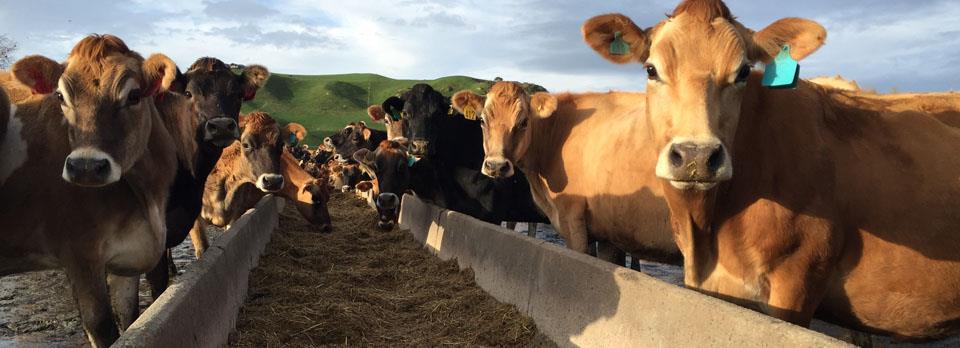
On so many farms the familiar smell of silage is the sickly cloying smell of butyric acid.
The same smell that gets you ordered to take a shower when you come in for breakfast after feeding out, the smell that makes most townies hold their noses. That smell has become so familiar over the years that many farmers naturally associate it to silage – it is prevalent across most farms during periods when silage is being fed. The funny thing is, good silage shouldn’t really have any smell at all. The familiar sickly smell is actually a sign of secondary fermentation that has caused butyric acid to form within the silage. And that smell is costing you money as it is a sign that the silage has lost some of its nutritional value. A good quality fermentation should be purely based on lactic acid, and lactic acid actually has very little smell.
WHAT’S GOING ON IN THE SILAGE?
As mentioned butyric acid is formed during secondary fermentation, produced by aerobic clostridial bacteria this fermentation is indicative of decomposition of the naturally formed (anaerobic) lactic acid. Aerobic fermentation degrades much of the original protein in the grass. Some farmers are naturally confused because butyric acid fermented silage is so common here in New Zealand they inherently associate the butyric acid smell to silage.
Added to this dilemma butyric acid fermented silage, while still being nutritionally degraded, can be very stable. Its high acidity levels can make it largely immune to moulds and any further degradation. However at this point the cost has already been paid, this butyric acid fermented silage has lost much of its protein as this has been used up during fermentation.
GOOD SILAGE MAKING IS A FINE ART.

Winter, a good time to identify mineral deficiencies and plan for the next season.
Winter is a good time to talk to your local vet about testing a group of cows from your herd for trace mineral deficiencies. Minerals worth checking in the blood are selenium, B12, iodine, magnesium and zinc. Iodine and zinc can often be variable, however if the average is low it is worth supplementing. It is worth also checking copper with a liver test rather then the blood as that is where copper is stored. These days with large amounts of PKE being fed, livers can often look very high, high copper levels in the liver can be a good early warning of impending build-up to potentially toxic levels.
If the cows are being fed brassica’s through winter and into spring, it will be very important to ensure cows have sufficient iodine, selenium, and copper. Cattle being feed fodder beet at more than 2 kilograms should be receiving some supplementary phosphorous in order to ensure they do not suffer phosphorous related metabolic disease in the spring. A phosphorous blood test pre calving is a good idea to ensure there is sufficient phosphorous levels at calving. Once deficiencies are identified it is a simple matter to introduce an Agvance balanced trace mineral blend into the system. These blends can be dosed through drinking water and at this time of year it is also worth considering putting at least some of the trace element formulation in through the supplementary feeds to make sure enough mineral gets into the cow as they are not drinking as much.
Most farmers will be using some magnesium oxide in their supplementary feeds during the winter/spring period. It is an easy job to incorporate the trace mineral blend into the much bulkier magnesium oxide, then in the case of a feed out wagon – layering the blend evenly across the top of the feed, or blending the combination into feeds where a mixer wagon is in use. Agvance can formulate complete mineral premixes for any herd under any feeding regime. Working with your vet or one our field agents, using our “Customizer” software, we can enter the different feed components and their levels, decide whether it is to be a transition, early lactation, mid lactation diet mix. These blends will include the macro minerals such as magnesium, calcium, and phosphorous, along with the ideal levels of trace elements required to balance the diet. Using some of the industry standard blends can lead to your cows falling short on some of the key minerals they most require.
Farmers break feeding fodder beet can feed minerals in a loose lick mix, which is poured into cut down drums and placed on the edge of the new break each day. Alternatively, if cows are being fed in the form of baled silage as well, phosphorous, magnesium and trace minerals can be liquefied and poured into the baled silage. A blend made from the correct mineral forms has the ability to deliver good levels of mineral elements to the parts of the body where those minerals are most needed. Poorly formulated mineral blends, owing to the fact the mineral is not bound to a protein may store well in the liver and some other organs that typically mop free minerals in inorganic form, but they will often be poorly translocated to other very important cells of the body. Such cells that make up the keratin layers of the hoof, udder cells, the reproductive system, the immune system, the central nervous system, are areas of the body where elements such as copper and zinc glycine are most necessary.