PREVENTION AND MANAGEMENT OF SUBCLINICAL KETOSIS
Subclinical ketosis (SCK) is a significant health challenge in our dairy herds, primarily occurring in early lactation when cows experience a severe negative energy balance.

Subclinical ketosis (SCK) is a significant health challenge in our dairy herds, primarily occurring in early lactation when cows experience a severe negative energy balance.
Sections in this article: Exploring the metabolic process and factors leading to ketosis Serious impacts of subclinical ketosis Prevalence of subclinical ketosis in NZ dairy
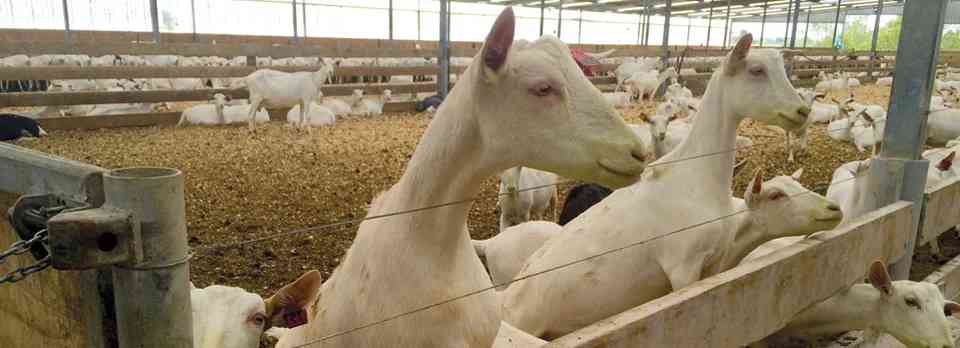
Ketosis in any of its forms can lead to sudden and catastrophic loss levels around kidding time.
A number of goat farms this year experienced significant losses around kidding time and during early lactation. Farmers were puzzled as to the cause and unfortunately these losses happened rapidly, before any remedial action could be taken.
Such acute losses at this time typically come down to one thing, a catastrophic energy deficit experienced during a critical stress period, namely kidding and early lactation. This disease goes under a number of names and confusingly can take a number of different forms. The most acute form is often called pregnancy toxemia in goats, or sleepy sickness. In dairy cattle it is more commonly called ketosis, or fatty liver disease.
These different forms can be made up of a range of symptoms but all emanate from the same root cause – a lack of glucose production. When the body fails to produce enough glucose for energy it kicks into survival mode and begins to break down fat tissue for energy, releasing ketones.
To fully understand this disease and its differing manifestations we need to have a good understanding of the stresses involved during the lead up to kidding and early lactation. At this time there is a rapidly increasing requirement for energy and the body needs to have the capacity to meet these needs within a very small period of time.
UNDERSTANDING KETOSIS IN DAIRY GOATS
Ketosis is a metabolic disease common to all living creatures, but particularly problematic in high production ruminants. It will usually only appear at critical stress times, namely kidding/calving and early lactation.
Ketosis is related to the body’s inability to synthesize sufficient glucose from fatty acids produced in the rumen to supply its energy demands. The body then starts to mobilize body fat (some humans would say that’s a good thing). The mobilized fat is broken down into what are called non-esterified fatty acids (NEFA’s). When these non-esterified fatty acids reach the liver, they are either oxidized into energy forming substances (ketones) or removed out again as very low-density lipoproteins (VLDL’s). This process is complex and is largely regulated by hormones such as insulin, ghrelin and leptin (the satiety hormone). The problem is, when the production of ketone bodies is upregulated in favour of the more efficient glucose energy cycle, it can lead to a significant energy deficit. A serious side effect of the over utilization of fat for energy is fatty liver disease; when fat goes into the liver in greater volumes than the livers capacity to process it, and this causes a fat buildup that can quickly lead to liver failure. Once established this condition is very hard to reverse, particularly in small ruminants with more limited liver capacity.