MANAGING THE RUMEN FOR BETTER COW HEALTH AND PRODUCTIVITY
If we’re expecting excellent health and productivity from our cows, we need to make sure the rumen is balanced, from dry-off to calving. Managing this

If we’re expecting excellent health and productivity from our cows, we need to make sure the rumen is balanced, from dry-off to calving. Managing this
Early lactation, spanning both calving and mating, is a stressful time for cows as energy demand is very high at a time when cows may
Minerals and the Transition Period
The Transition cow mob, more commonly referred to by farmers as the springer cow mob, has the potential to respond to a higher level of thought and attention. Making key decisions around feeding and supplementation of this mob can have a bigger impact on a dairy farm’s profitability than any other single set of management decisions made throughout the rest of the season. A well transitioned cow will normally produce more total milk, have less disease issues, and a better reproductive outcome, than cows that don’t receive as much attention around this time.
Most experts agree that the transition period begins 21 days prior to the day the cow gives birth, into 21 days of lactation. For any cow this is a period of vast metabolic change. During this time their hormone levels are going through rapid developments as the body gets ready to mobilise many of the key minerals required, as well as preparing her body to mobilise the vast amounts of energy required during birth and lactation. Transition is normally the single highest stress period a cow will experience each year.
A TIME NOT TO DO THINGS BY HALVES
Both the period prior to calving and the period after calving are equally important to ensure the cow will produce at her potential, remain healthy and conceive again when mated. In my experience farmers will tend to either concentrate on the period leading up to calving or the period after – most commonly the period after calving gets most attention. And this can create a problem. In this article we will concentrate on the transitioning of cows only, rather than heifers (first calvers) where the focus need only be on ramping up the feed rate prior to calving. Transitioning cows is a very different process, a cow that is not transitioned correctly leading up to calving is a cow that will calve with her metabolic processes operating well short of full potential. She will be more exposed to both clinical and subclinical metabolic disease through either being calcium deficient or lacking the ability to mobilise sufficient calcium, ketosis, fatty liver disease, or possibly a combination of these problems.
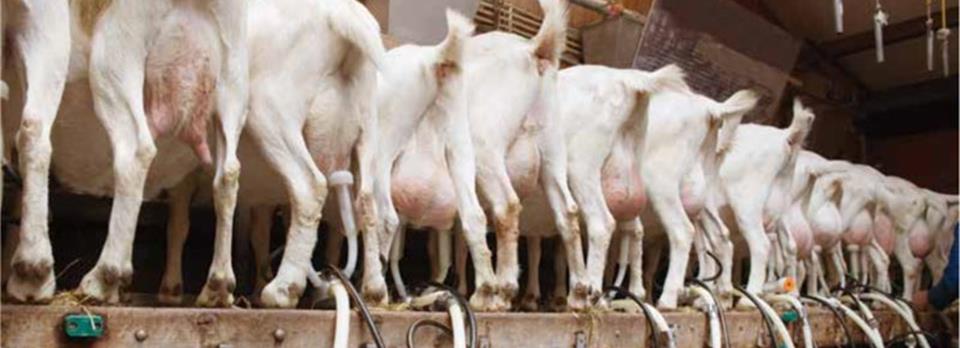
It is tempting, given the limited research around goat nutrition to assume a goat’s nutritional requirements fit somewhere between that of sheep and cattle. This assumption would be a mistake. When it comes to mineral nutrition goats have very different requirements.
Based on a goat’s production level when related to body weight and feed intake, these small ruminants are probably better compared to the ruminant equivalent of an F1 racing car. Just as you wouldn’t run a high performance car on low octane fuel, you shouldn’t feed your goat the same way as you would cattle and sheep. Goats have different and very specific nutritional requirements. If these requirements are not met, the animal will not perform to its full potential, and worse still will be subject to a higher level of disease.
The interesting thing about goats is that their requirement is both higher and lower depending on the element in question. While their milk is in many ways more nutritious than that of a dairy cow, nature has at the same time designed the animal to survive under very different conditions, and on a very different diet from that of a cow.
SO WHAT ARE THE MINERAL REQUIREMENTS OF DAIRY GOATS?
Lets start with one of the key macro elements, phosphorous. Goats typically have a lower requirement for phosphorous to that of dairy cattle. They seem to be better at recycling it and while they have higher levels in their saliva, losses during rumination are lower than that of a cow.
In contrast calcium requirements are quite high and should be set at least twice that of phosphorous in the diet.